

Accounting software automates the process of making journal entries. This reduces the chance of errors and saves time, making it easier for businesses to keep accurate financial records. After each year’s financial statements were completed, closing entries were needed. The purpose of closing entries is to get the balances in all of the income statement accounts (revenues, expenses) to be zero before the start of the new accounting year. The net amount of the income statement account balances would ultimately be transferred to the proprietor’s capital account or to the stockholders’ retained earnings account. The double-entry system ensures that every transaction is recorded in two accounts, maintaining the balance between assets and liabilities.
What are the different types of journal entries?
With the help of robust eCommerce web development solutions, businesses can integrate accounting tools directly into their platforms, simplifying transaction tracking and financial reporting. We’ve gone through 15 journal entry examples and explained how each are prepared to help you learn the art of recording. By now you’d feel more confident in preparing journal entries.
- Where income increases an owner’s equity, expense decreases it.
- The Cash Account will be decreased with the amount paid as expenses, so it will be credited and Expenses will be debited.
- The capital account will be credited, and the cash or assets brought in will be debited.
- For example, the sales of merchandise are a retailer’s operating revenues.
- Receipt transactions are recorded in the cash account or accounts receivable.
- The balance sheet reports the assets, liabilities, and owner’s (stockholders’) equity at a specific point in time, such as December 31.
Cash Reconciliation Entry:
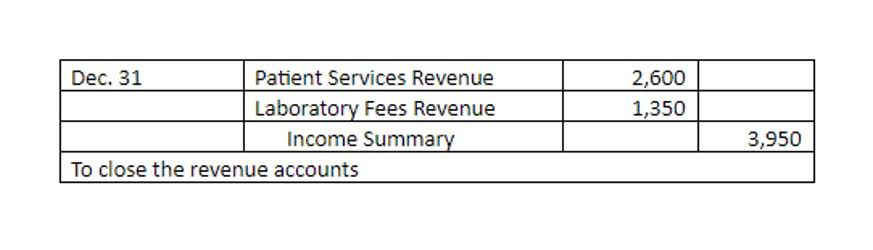
Now that all the end of the year adjustments are made and the adjusted trial balance matches the subsidiary accounts, financial statements can be prepared. After financial statements are published and released to the public, the company can close its books for the period. Closing entries are made and posted to the post closing trial balance. Cash transactions involve the exchange of money for goods or services and are recorded to reflect the inflow or outflow of cash from the organization, impacting its financial position and liquidity.

Single- Versus Double-Entry Accounting
These errors can result in a lack of financial transparency and make it challenging recording transactions examples to maintain financial ethics and responsibility. When transactions are omitted or recorded incorrectly, it can distort the true financial position of an entity, compromising its credibility. If your debits and credits don’t balance, it’s like a wobbly table—you need to fix it before moving on. The description column lists the accounts involved and a brief narration of the transaction.
- Instead, these account balances are carried forward to the next accounting year.
- The first thing any accountant will learn is recording a transaction in the form of a journal.
- Then, credit the loans payable account by the amount of the loan.
- When you record a financial transaction in your books, use debits and credits to show the equal and opposite effects on two or more accounts.
- You should consult your own legal, tax or accounting advisors before engaging in any transaction.
- In the journal entry, Dividends has a debit balance of $100.This is posted to the Dividends T-account on the debit side.
A financial transaction is a communication or an agreement between buyers and sellers to exchange assets, services, or goods in return for money. It involves at least one asset, for example, money or any valuable item like silver or gold. Made at the beginning of the new accounting period, reversing entries negate specific adjusting entries made in the previous period. Made at the end of the accounting period to transfer the balances from the temporary accounts to the permanent accounts. Sales occur when a business sells a product and receives cash, receivables, or other assets.
- Transaction record in accounting is defined as a business occurrence that has a monetary effect on the financial records of a firm.
- Cost of Goods Sold is a general ledger account under the perpetual inventory system.
- Accounting software automates transaction recording and reporting, enhancing efficiency and accuracy.
- Provisions journal entry is passed to show the amount set aside by the firm to meet contingencies.
- For example, if Company A purchases a machine from Company B and sees that it is defective, returning it will not entail any cash spent, so it falls under non-cash transactions.
- As a result, US GAAP requires most corporations to use the accrual method of accounting.
- When a company sells goods or services to a customer, it records the sale as a credit in the sales account and as a debit in the corresponding revenue account.
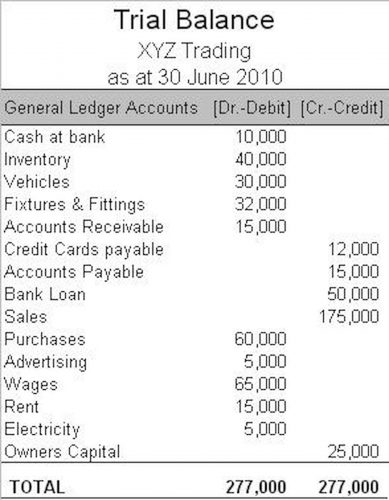
It is a good idea to familiarize yourself with the type of information companies report each year. Peruse Best Buy’s 2017 annual report to learn more about Best Buy. Take note of the company’s balance sheet on page 53 of the report and the income statement on page 54. These reports have much more information than the financial statements we have shown you; however, trial balance if you read through them you may notice some familiar items. Notice that for this entry, the rules for recording journal entries have been followed. Imagine your piggy bank adventure as a busy beehive, where every honey drop collected or spent is carefully noted by bee accountants.
Revolut Alternatives: How to Pick the Best Payment App
It will ensure that total debits will always equal total credits. A journal entry records financial transactions that a business engages in throughout the accounting period. These entries are initially used to create ledgers and trial balances. Eventually, they Car Dealership Accounting are used to create a full set of financial statements of the company. Using accounting software for journal entries comes with many benefits.

This diligence is crucial for financial stewardship, as accurate records support informed decision-making and help in identifying and addressing any discrepancies or irregularities. Such transactions play a vital role in financial decision-making and management as they directly influence the organization’s cash flow. Ensuring accurate recording and monitoring of cash transactions is imperative for maintaining financial controls and analyzing the company’s financial health. This includes discerning the impact on assets, liabilities, and equity, as well as recognizing when the transaction occurred and how it aligns with the fundamental accounting equation. It’s essential to analyze the economic substance of the transaction to determine its financial impact and ensure that it is appropriately classified.